
Last updated: 2026-10-29
Computational loads are not subject to NERC Reliability Standards today (PJM Inside Lines, 2026-08-11). NERC’s Board adopted CLO-001-1, CLO-002-1 and CLO-003-1 on 2026-10-26, and NERC lists all three as pending regulatory filing (NERC One Stop Shop workbook, NERC newsroom, 2026-10-27). FERC set 2026-12-31 as the filing deadline (FERC order, Docket RD26-7-000). In Texas, ERCOT’s NOGRR282 has been in effect since 2026-08-01 (ERCOT NOGRR282). PRC-029-2 applies to generator owners, not loads (NERC PRC-029-2). PJM reports that ride-through requirements for computational loads are expected in NERC standards in 2027 (PJM Inside Lines, 2026-08-11).
The rules and events
| Rule or event | Applies to | Status and date | What it requires, in one line | Source | 3DFS explainer |
|---|---|---|---|---|---|
| NERC Level 3 alert | Transmission planners, planning coordinators, transmission owners, balancing authorities, reliability coordinators and transmission operators | Initial distribution 2026-05-04. Reports were due 2026-08-03. | Essential Actions for computational load modeling, studies, recording, commissioning, operations, protection and control. NERC says it is not the same as a Reliability Standard and creates no mandatory obligation. | NERC Level 3 alert, NYSRC copy | NERC standards explained |
| FERC order, RD26-7-000 | NERC | Issued 2026-07-16 | Directs NERC to file computational load standards by 2026-12-31, expects registry criteria by the same date, and directs a workplan for further standards by 2027-03-01. | FERC | FERC and data centers |
| NERC CLO-001-1 | Owners of Computational Load Sites with a total connected load of 50 MW or more, supplied at 100 kV or more, and the planners and utilities that serve them | Board adopted 2026-10-26. Pending regulatory filing. | Interconnection requirements, interconnection studies and model data. | CLO-001-1 final text, NERC One Stop Shop | NERC standards explained |
| NERC CLO-002-1 | Owners and operators of the same sites | Board adopted 2026-10-26. Pending regulatory filing. | Operating data, and Interpersonal Communication capability with the balancing authority and transmission operator. | CLO-002-1 final text, NERC One Stop Shop | NERC standards explained |
| NERC CLO-003-1 | Owners of the same sites, and the owner of the main power transformer | Final ballot closed 2026-10-14. Board adopted 2026-10-26. Pending regulatory filing. | Protection coordination and disturbance recording. | CLO-003-1 final text, NERC One Stop Shop | NERC standards explained |
| NERC registry criteria | Sites that would register as Computational Load Owner and Computational Load Operator | Board approved 2026-10-08. Filed with FERC 2026-10-21. FERC must still approve. | Creates the two entity types, with a threshold of 50 MW at 100 kV or more. | NERC Large Loads Action Plan, Q3 2026 update, NERC Large Loads Action Plan | NERC standards explained |
| ERCOT NOGRR282 | Large Computational Loads in ERCOT: sites of 75 MW or more of aggregate peak demand where 50% or more of the demand is power-electronic computational load | PUCT approved 2026-07-09. In effect since 2026-08-01. | Sets frequency and voltage ride-through. Bars a trip or transfer scheme that acts solely on a count of sags or swells the load must ride through. Sites with agreements executed on or before 2025-11-14 can qualify for an exemption. | ERCOT NOGRR282, PUCT report, NPRR1308 definition | PRC-029-2 article |
| NERC PRC-029-2 | Generator owners of inverter-based resources | Mandatory and enforceable from 2026-10-01. FERC approved it by order issued 2026-09-30, Docket RD26-10-000. | Ride-through for inverter-based resources such as solar, wind and battery plants. It does not cover loads. | NERC PRC-029-2, NERC One Stop Shop | PRC-029-2 article |
| PJM, Dominion zone event | Data centers in the Dominion zone | 2026-07-22 | About 3,800 MW of data center load, by Dominion’s count, transferred to backup generation after a 230 kV line fault that protection removed properly. PJM called it the largest such event in its history. | PJM Inside Lines | 3,800 MW left the grid |
| PJM, two earlier events | Data centers in the Dominion zone | 2024-07-10 and 2025-02-17 | Sudden load transfers of about 1,500 MW each in the same zone. | PJM Inside Lines | 3,800 MW left the grid |
What none of these do yet
No rule here sets a minimum voltage or frequency ride-through for loads nationally. NERC says the first phase does not address industry-wide minimum ride-through (NERC FAQ, October 2026). PJM reports that Matthew Wharton said the same (PJM Inside Lines). No standard in the set says when a site may transfer to backup power (CLO-002-1, CLO-003-1).
What this means inside the facility
A site can trip on a fault that the grid clears correctly (PJM Inside Lines). PJM’s Operating Committee chair said of the data centers that “we feel they are disconnecting too early” (PJM Inside Lines). CLO-003-1 R9 and R10 require the site owner to coordinate protection settings with the owners of connected grid equipment (CLO-003-1 final text). The 3DFS controller does not provide ride-through (3DFS Standards Compliance).
Dates to watch
| Date | Event | Source |
|---|---|---|
| 2026-12-31 | NERC filing with FERC due | FERC |
| 2027-03-01 | Workplan for further standards due | FERC |
| 2027 | Ride-through for loads expected in NERC standards | PJM |
Critical perspective
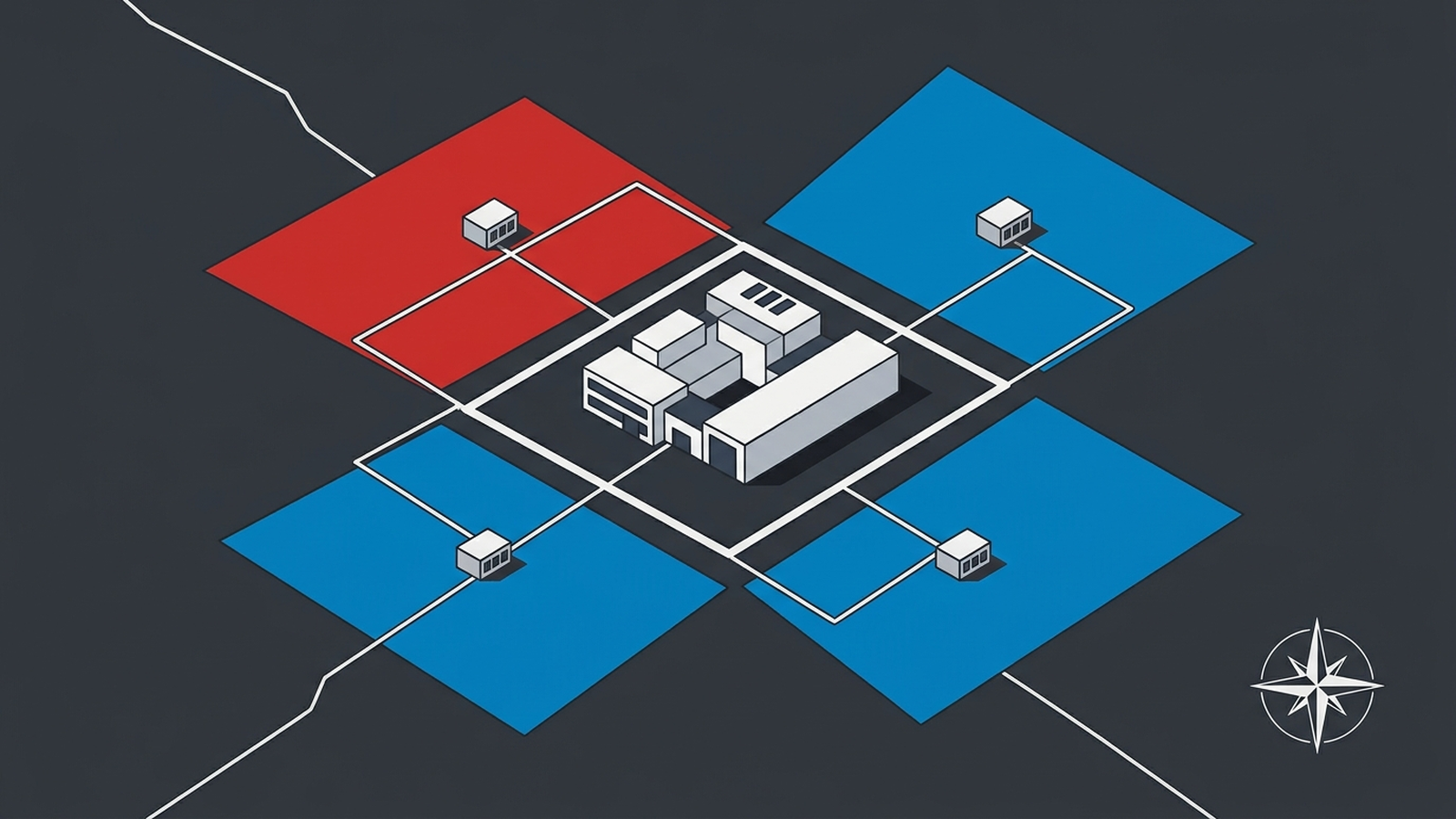
Four documents draw the line in four places. The Secretary of Energy’s 2025 proposal to FERC defines a large load as greater than 20 MW (DOE ANOPR letter, p. 3, note 1). NERC first proposed 20 MW at 60 kV for registration and raised it to 50 MW at 100 kV after comments (NERC Large Loads Action Plan, Q3 2026 update). ERCOT counts 75 MW of aggregate peak demand, at least half of it computational, with no voltage test (NPRR1308 definition). NERC’s own white paper says many in the sector would pick 50 or 75 MW, and that other characteristics should count too (NERC white paper, p. 38).
The measures differ as well as the numbers. NERC counts total connected load (CLO-001-1, p. 3). ERCOT counts peak demand behind common points of interconnection or service delivery points (NPRR1308 definition). The DOE proposal covers new loads that connect directly to transmission, and asks whether a threshold is needed at all (DOE ANOPR letter, PDF pp. 12 to 13).
Inside NERC the line moves again at each utility. Each planning coordinator defines its own qualified change, and NERC calls one continent wide definition not practical (NERC FAQ, p. 18). Each transmission owner writes its own interconnection requirements (CLO-001-1, p. 4), and these can include ride-through criteria (NERC FAQ, p. 18). In August PJM said it was evaluating ride-through standards for large loads (PJM Inside Lines).
An operator with campuses in several regions cannot wait for one definition. In ERCOT the ride-through rule has applied since 2026-08-01 to sites that are not exempt (ERCOT NOGRR282, PUCT report). Elsewhere each utility’s requirements decide the settings. The Level 3 alert asks planners to collect UPS settings, trip and reconnect settings, and the conditions for transfer to backup power (NERC Level 3 alert, p. 4). Build that record once per campus, then match it to each utility’s requirements.
Frequently asked questions
Do the NERC standards require ride-through? No. NERC says they do not address industry-wide minimum voltage and frequency ride-through (NERC FAQ).
Are the standards in force? No. NERC lists them as pending regulatory filing (NERC One Stop Shop). Each takes effect on the first day of the first calendar quarter after the effective date of the FERC order that approves it (CLO-001-1 implementation plan).
Does a 30 MW site fall under them? Not under the NERC standards, which apply from 50 MW at 100 kV or more (CLO-001-1 final text). In ERCOT, NOGRR282 applies from 75 MW of aggregate peak demand (NPRR1308 definition).
Does PRC-029-2 apply to data centers? No. It applies to generator owners of inverter-based resources (NERC PRC-029-2).
Explainers on this site
- NERC’s computational load standards, explained
- PRC-029-2 took effect October 1: what it covers and what it does not
- Data centers disconnected about 3,800 MW on July 22: what PJM found
- Do GPU racks create harmonics? What NERC names as the sources
- Why a data center can run at a leading power factor
- AI data center power: the decisions in front of executives in 2026
- Military bases asked to run 90 days off the grid
Related: data center and compute solutions.