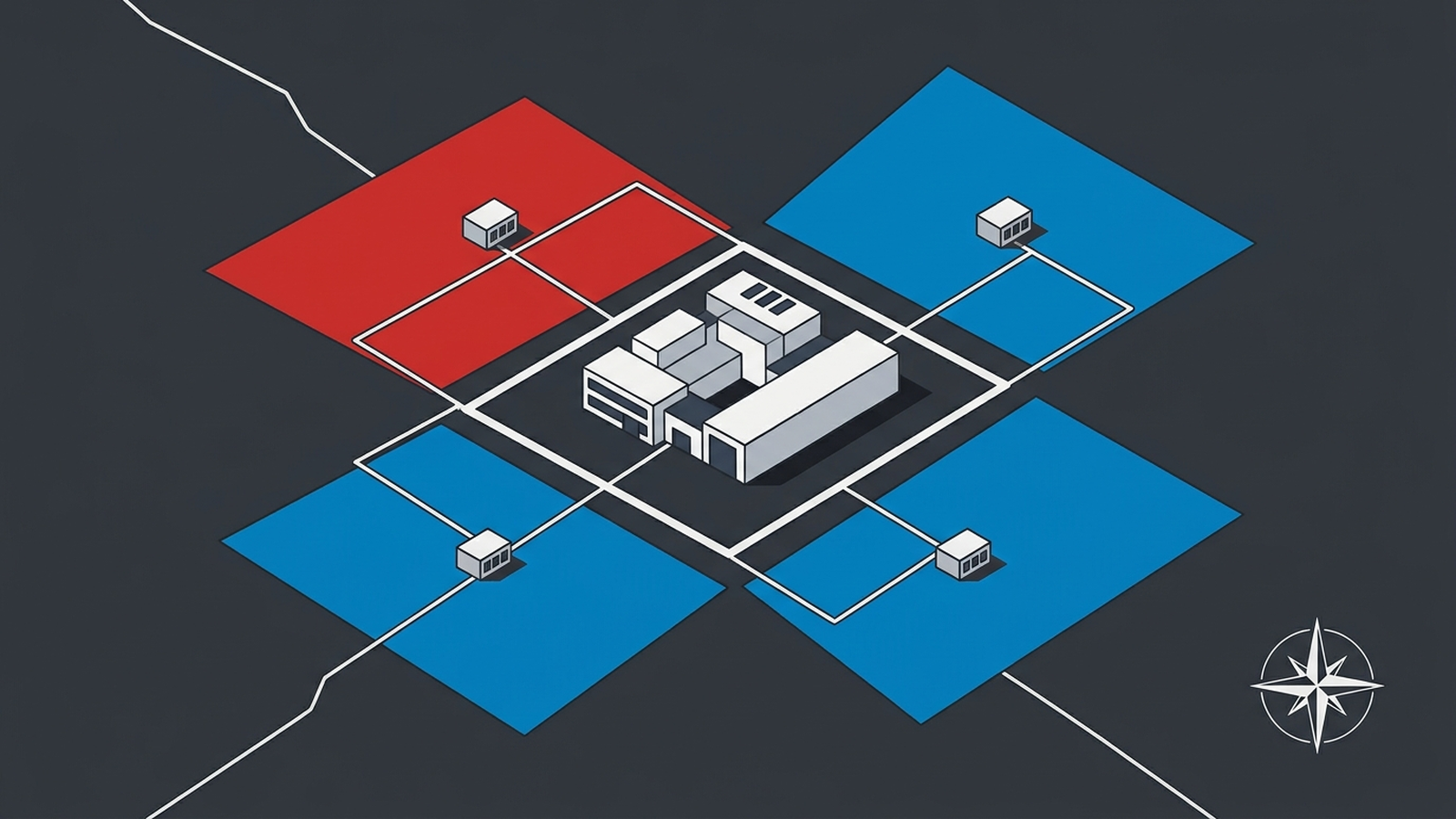
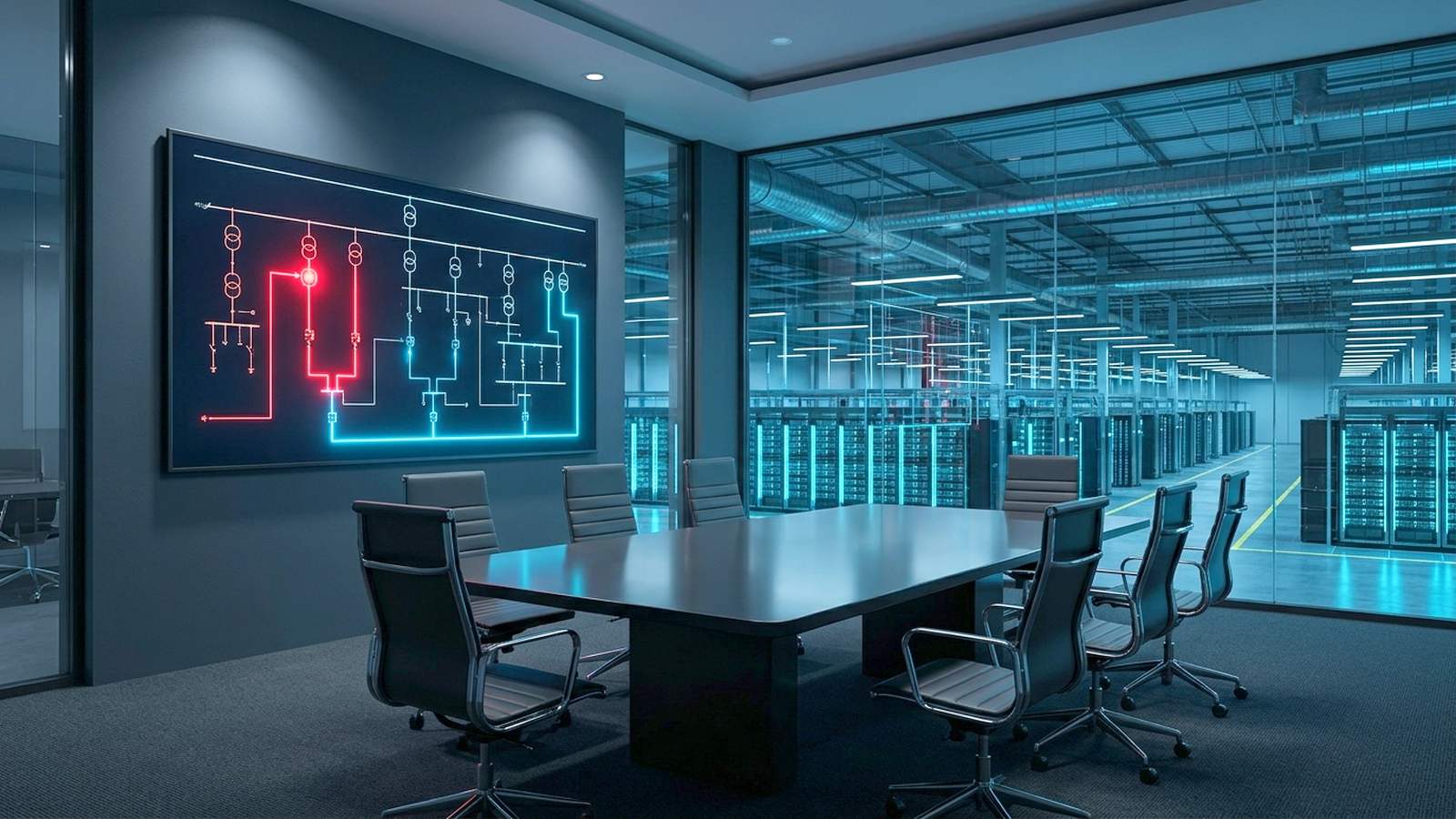

A data center that drops off the grid during a fault is now a regulatory matter in Texas, and national rules are on their way (ERCOT, FERC). Three rules changed in 2026. FERC ordered NERC on 2026-07-16 to file national standards for computational loads (FERC). ERCOT’s NOGRR282 has been in force since 2026-08-01 (ERCOT). NERC’s Board adopted CLO-001-1, CLO-002-1 and CLO-003-1 on 2026-10-26 (NERC One Stop Shop workbook). The first decision is to learn what the current at the site looks like today.
1. The rules
| Rule | Who is exposed | Deadline | First step |
|---|---|---|---|
| NERC CLO-001-1, CLO-002-1, CLO-003-1 | Sites of 50 MW or more supplied at 100 kV or more (CLO-001-1 final text) | NERC files with FERC by 2026-12-31 (FERC). Each takes effect on the first day of the quarter after FERC approval, with phase-ins of up to 36 months (NERC Project 2026-02) | Ask whether the site meets the 50 MW test |
| ERCOT NOGRR282 | Large computational loads in ERCOT | In force since 2026-08-01 (ERCOT) | Ask how the site’s protection counts voltage sags |
| PRC-029-2 | Generator owners of inverter-based resources, not data centers (NERC PRC-029-2) | None for loads | None |
The exposure under NOGRR282 is specific. A large computational load may not trip or transfer solely on a count of sags or swells in a period, where the rule requires it to ride through each one (ERCOT PUCT report). If equipment limits force such a scheme, the load must be able to stay connected through at least six sags or swells within 90 seconds (ERCOT PUCT report). After a failure to ride through, the customer must report the root cause within 90 days of ERCOT’s request and then submit and carry out a plan (ERCOT PUCT report). Where ERCOT finds an imminent risk to reliability, it may require the load to disconnect until the customer shows that it can comply (ERCOT PUCT report).
The NERC standards do not set an industry-wide minimum voltage or frequency ride-through (NERC FAQ). PJM expects those requirements in NERC standards in 2027 (PJM). The decision is whether to plan for that now or wait.
2. The event
On 2026-07-22 a mechanical failure removed a 230 kV line in Northern Virginia from service, and data centers in the Dominion zone then transferred to backup generation (PJM). Dominion put the total at approximately 3,800 MW, and PJM called it the largest such event in its history (PJM). PJM’s Operating Committee chair called it “a normally cleared fault” and said the data centers were “disconnecting too early” (PJM).
For a board, the point is that the fault was properly removed and the loads left anyway (PJM). PJM reports similar transfers of about 1,500 MW each on 2024-07-10 and 2025-02-17 (PJM). PJM says computational loads set protection to watch for sudden change or abnormal voltage, and may switch to on-site generation even for routine disturbances cleared correctly (PJM). The exposure is the site’s own protection settings, and the first step is to ask what they watch for.
3. Capacity and time
Citing PJM data, Data Center Knowledge reported on 2026-05-12 that AI infrastructure projects entering service in 2025 took more than seven years on average to reach operation (Data Center Knowledge). It also reports Wood Mackenzie’s figure of more than 160 weeks for substation transformer lead times in 2026 (Data Center Knowledge).
The decision is how much installed rating goes to current that does no work. The 3DFS data-centers page states: “Where kVA is the limit, the same rating carries more useful load. Results depend on the facility baseline.” (3DFS) It adds: “Where the limit is a contract in megawatts, correction adds little capacity under that limit.” (3DFS) The page says to verify released capacity and net savings at equal useful output, so the first step is a measured baseline (3DFS).
4. What the operator controls
Three things sit inside the facility. Measurement comes first: the 3DFS data-centers page starts with a one-week measurement at one PDU (3DFS). Protection settings come second: CLO-003-1 R9 and R10 require the site owner to establish and use a process for new and revised settings so that protection operates in the intended sequence during faults (CLO-003-1 final text). Current at the panel comes third, and at each instant the 3DFS controller supplies the reactive, harmonic and unbalanced share of the current (3DFS).
Two things sit outside that control. The UPS still carries the ride-through (3DFS). The 3DFS controller does not provide ride-through (3DFS Standards Compliance).
5. What to ask the team this quarter
1. How does the site’s protection count voltage sags, and what does it do at the limit? (ERCOT PUCT report) 2. What process sets protection settings, and does it include the owners of connected grid equipment? (CLO-003-1) 3. Does the site meet the 50 MW at 100 kV test, and who would register as its owner and operator? (CLO-001-1) 4. What does a week of measurement at one PDU show? (3DFS) 5. What would change if the ride-through requirements PJM expects in 2027 arrive? (PJM)
6. Frequently asked questions
What do the rules cost? In ERCOT the exposure is a possible required disconnection where ERCOT finds an imminent risk (ERCOT PUCT report). For outages, in Uptime Institute’s 2023 data center survey, 54% of respondents said their most recent significant outage cost more than 100,000 dollars (Uptime Institute, Annual Outage Analysis 2024).
What happens after a trip? In ERCOT the customer reports the root cause within 90 days of ERCOT’s request and submits a plan (ERCOT PUCT report). Elsewhere the NERC standards still wait for filing at FERC (NERC One Stop Shop workbook).
Can capacity grow without a new transformer? Only where kVA is the limit, and results depend on the facility baseline (3DFS).
What does a power quality risk analysis decide? The 3DFS page says PQRA “reports what it costs, what it risks and what to fix first, from the waveforms a facility actually recorded” (3DFS PQRA).
Critical perspective
The compliance cost figures on the record come from a party that would pay them. The Texas Blockchain Council told ERCOT that a low-voltage fix costs “upwards of $1 million per MW” (Texas Blockchain Council, NOGRR282 comments, March 18, 2026). Its February filing put dedicated batteries at more than $1.6 million per MW (Texas Blockchain Council, NOGRR282 comments, February 18, 2026). Neither filing attaches a workpaper or a method behind its cost figure (March 18, February 18). ERCOT priced its own side at $600K to $750K a year in staff (PUCT report).
Some dates are set or proposed. The approved Texas rule applies to every non-exempt site that proposes to interconnect or keeps an interconnection, with limited low-voltage and overvoltage relief until January 1, 2028 (PUCT report, 2.6.4(1), 2.15(1) and 2.15(3)). NERC expects computational load owners to register from 2027 (CLO-001-1 implementation plan). PJM’s draft would bind projects that enter its study process from January 16, 2027, a date written as 61 days after its filing (PJM Planning Committee, October 6, 2026). Sites already operating would comply by January 16, 2028, or one year after commercial operation (PJM).
Other answers do not exist yet. NERC’s first standards set no industry-wide minimum ride-through (NERC FAQ). PJM’s draft says that PJM “will clarify the consequences” of failing to comply (PJM).
Outside ERCOT’s rule for new sites, a board can defer the equipment choice until the PJM filing and the NERC ride-through work are known. It cannot defer the protection review. ERCOT’s rule and PJM’s draft both bar a trip or transfer scheme that acts solely on a count of sags (PUCT report, PJM). PJM’s draft adds that shifting consumption to other resources does not by itself count as compliance (PJM). The settings review is the item to fund this quarter.
Related: the grid rules hub, data center solutions, PQRA and site analysis.