
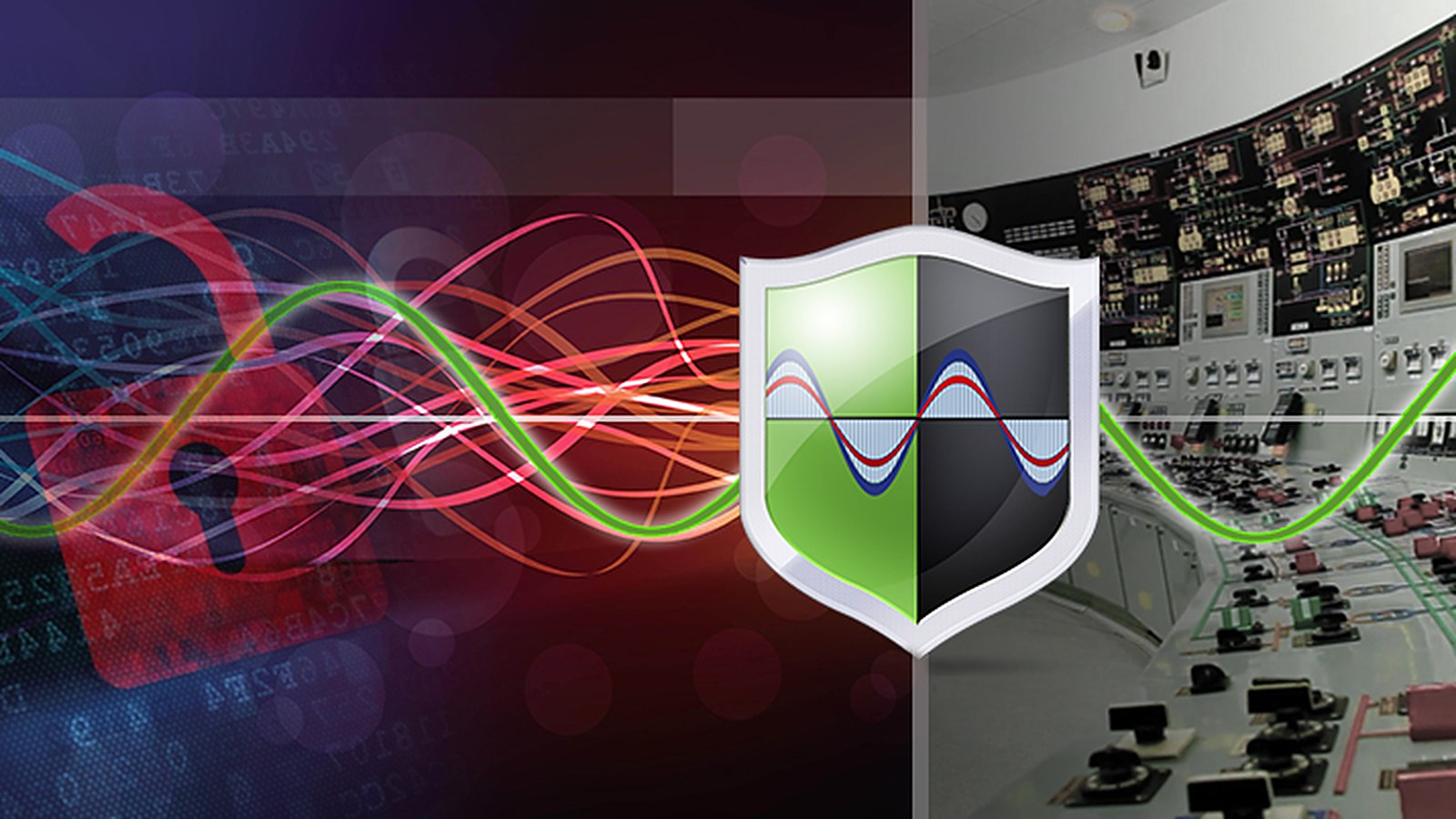

The Vulnerability of Power Flow
The most destructive threat scenarios that could be exerted against our grid and power networks involve the manipulation of power control technology to cause cascading power events that inflict widespread damage to utility and customer equipment.
This applies universally, in generation, transmission and distribution and on the customer side of the meter due to the interconnected nature of power flow. The inherent vulnerability of interconnection is that power flow disruption in one area of the grid can largely impact other areas both upstream and downstream.
The present cyber security measures taken to protect against these events are focused on the integrity of the power controls systems utilizing traditional IT safeguards. When these safeguards fail, the event can quickly become devastatingly widespread as there is nothing directly controlling the underlying power flow. Reclosers and circuit breakers are designed for threshold conditions and grid sensing equipment is far from real time allowing the propagation of cascading power flow disturbances to radiate throughout the grid undetected at the speed of lightning.

This is not relegated to cyberattacks; a non-malicious event of a transformer failing, or grid operator error will have power flow effects ripple throughout the grid with the potential for cascading effects as seen in the 2003 Northeast Blackout. No matter the source of disruption, power flow is not presently controlled in a way that would prevent this from happening. This is the fundamental vulnerability of our grid.
Securing, Isolating and Optimizing Power Flow
Software Defined-Electricity (SDE) can be a stop gap circuit protection measure that prevents destructive power conditions either maliciously or unintentionally introduced from affecting the power flow in a circuit. SDE isolates, corrects, and optimizes power flow effectively thwarting some of the most catastrophic cyber-attack scenarios. Viable scenarios intended to create destructive cascading power events that lead to prolonged outages and equipment damage. If orchestrated with sophistication, resources, and power flow knowledge, these types of events could be inflicted across entire interconnection regions of our grid.
SDE uses real time edge computing to mathematically oversample power flow and make precision corrections with fast acting power electronics synchronously with the network to safely correct electricity, resulting in controlled, balanced, and secured power as it flows.
SDE creates a demarcation point for power flow for a circuit, preventing the propagation of distorted power past the node in either direction. Upstream power fluctuation and distortion is corrected in real time and does not affect a circuit protected by SDE, and no matter how aggressively the power is consumed within the circuit, it does not affect the upstream power flow outside the circuit. It is digital separation and protection for both sides of the node, adding bidirectional control where there is none today.
New Layer of Anomalous Detection of Power Usage
As attacks on grid, power networks and control systems become more sophisticated, the security for these systems must advance to universally identify threats. SDE offers a technological breakthrough in power sensing at the circuit level that can detect and monitor any activity, eliminating the possibility of bad actors operating unseen in a power network circuit.
In the normal course of controlling and balancing power flow in real time, SDE creates a sophisticated baseline of the power flow through in depth modeling of both the power supply and load consumption. This level of power sensing provides advanced data insights into the power network that create a new level of visibility into power usage.
Today, anomalous detection capabilities are deployed as an advanced cyber security measure focused on detecting IT network traffic pattern deviations. With SDE the same approach can be applied directly to the power itself providing situational awareness for security operations that malicious power flow activity is occurring the instant a deviation from the baseline model is detected.
This power usage baseline is the equivalent of having an individual power quality analyzer monitoring each load in the circuit and the model is updated every microsecond providing all of the necessary information to glean insight into potential malicious activity in power systems in real time as it is occurring.
Whether generation, transmission, distribution, charging/discharging energy storage, converting AC/DC, or load side consumption, it is all power that is flowing in real time. SDE delivers a new, critical layer of control and security to the grid and power networks.
This article’s PDF, The Vulnerability of Power Flow, is not among the papers on the Press and Case Studies page.
What correction at one panel does and does not isolate
The Defense and Critical Infrastructure page describes the controller’s reach in plain terms. One controller corrects one panel. At a panel fed from a microgrid bus, current supplied by the controller does not pass through the battery inverter or the generator. Panels without a controller keep their own distortion.
Correction at a load does not propagate back up the network. Interruptions, sags and impulses on the source stay with the uninterruptible power supply, the transfer switches and the surge protection. A deep sag from the utility side stays with stored energy, as the Voltage Stability page explains.
The record at the panel and the network interface
The controller measures the full waveform of the loads under correction and logs each correction at the panel. The switchboard monitor shows the result. The panel record supports the cause analysis.
The controller runs with no internet dependency and no cloud latency. Its network interface enters the facility’s segmentation like any other panel device. The Data Centers and Compute page cites a 2022 Deloitte discussion with a caution. The discussion states that software-defined electricity raises the cyber risk profile of the companies adopting it. It also states that the technology offers value through data analytics.
Where this stands today
The Defense and Critical Infrastructure page now covers critical loads that run on an uninterruptible power supply, a generator or a battery. It lists what the controller does not do: it does not form the island, hold frequency, provide fault current or replace protection.
The Resilience page adds that the controller changes none of the outage or sag counts. Defense and critical infrastructure conversations start under the right agreements. Start with a one-week measurement at one panel.
Related reading
- SDE Summary: measure, model and correct at the panel, each cycle
- Delivery: power pushed forward and backward on feeders built for one direction


Comments