


3DFS Logo

SOFTWARE-DEFINED ELECTRICITY
REAL-TIME POWER OPTIMIZATION

You can’t fix what you can’t see

Power quality control starts with measurement precision. Traditional RMS meters calculate averages over entire AC cycles updating readings every 1-3 seconds. This averaging masks the microsecond transients, subcycle distortions, and phase anomalies that destroy equipment. While RMS tells you average voltage is 208V, it can’t reveal the 400V spikes, or super-harmonic distortion happening between measurements.


How SDE Measures

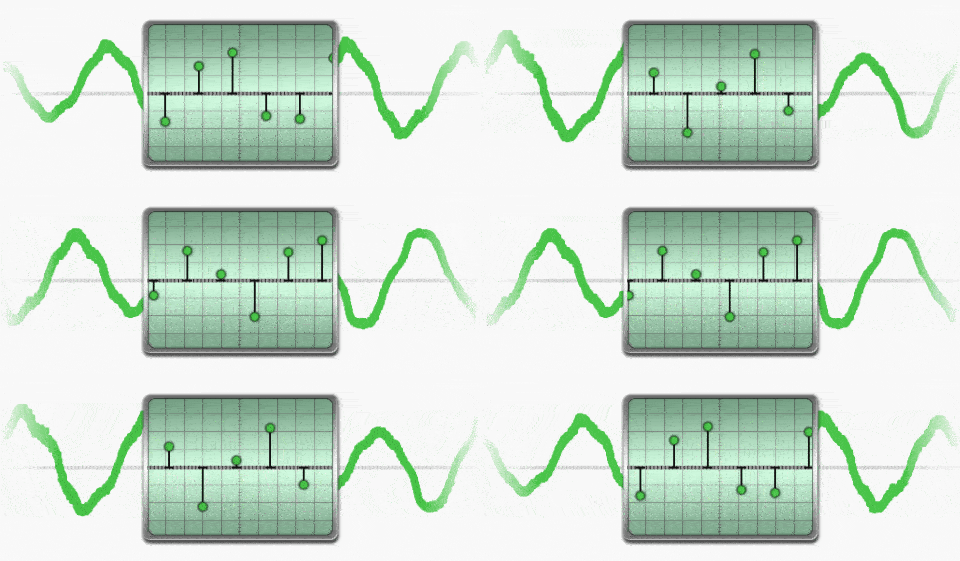
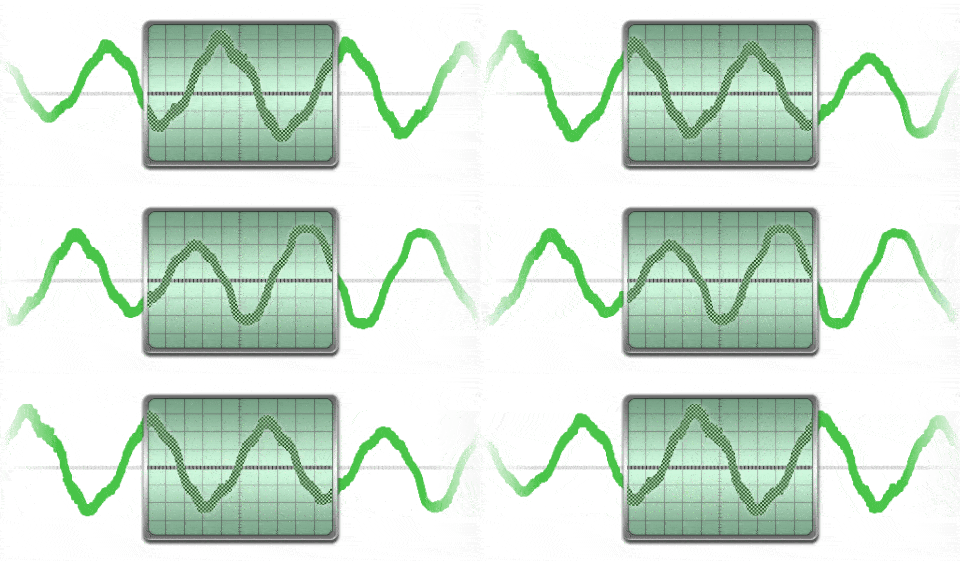
While traditional meters provide snapshots every second, SDE analyzes electricity continuously as it flows – capturing events that last microseconds, not just averages over seconds.


  • 26 electrical parameters at 24 bit resolution – Not sequential sampling, but simultaneous measurement across all phases and power components

  • Subcycle granularity – Captures nano-second distortions within individual sine waves, not averaged across hundreds of cycles


Digital Modeling: The Electrical Digital Twin

SDE continuously analyzes the complete electrical network as an integrated system. By measuring all parameters simultaneously, SDE identifies distortion patterns and their remedy in real-time:


  • Harmonic signature analysis – Identifies and counters the full range of harmonic frequencies 

  • Phase relationship mapping – Tracks how unbalanced loads create neutral current

  • Impedance profiling – Measures dynamic impedance changes as loads switch on/off

  • Power flow optimization – Calculates optimal correction needed for each parameter


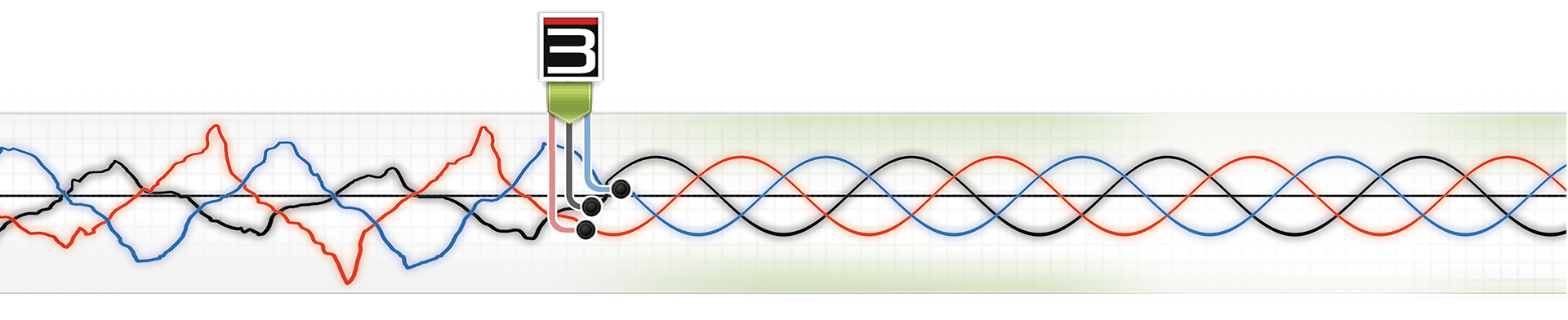
This isn’t predictive modeling – it’s continuous measurement and instantaneous response. SDE sees distortions as they form and corrects them before they propagate through the system.

Solid State Digital Correction 

Leveraging our precise digital modeling, SDE executes real-time corrections through solid state silicon carbide semiconductors – transforming standard power into perfect power in real time. This unified approach creates an elegantly simple solution with no maintenance, no adjustments, and no degradation – just continuous optimization that maintains itself at 96%+ efficiency.
  • Real Time Response Time – Detects and corrects faster than a traditional meter can even sample

  • Grid-edge – No cloud latency, no communication delays – correction happens without an operator or internet connection

The result: Clean, balanced, efficient power delivered continuously to every connected device. No adjustments needed, no maintenance required – just measured, verified improvement in power quality from day one.

Optimized Electricity

SDE optimizes electricity delivery, reducing power consumption, heat generation, and emissions while enhancing overall system efficiency and reliability.

The ultimate in power quality and stability

SDE provides comprehensive power quality correction across all critical electrical parameters simultaneously, maintaining system stability with industry-leading 98% efficiency.

Asset life & performance

SDE-corrected and balanced power prevents premature equipment failures and ensures all connected devices operate at their optimal performance levels.

Better end product

SDE implementation leads directly to improved operational results, including higher production quality, better data integrity, and significantly reduced system downtime.

See SDE in Action

Technical Architecture: Software-Defined Electricity (SDE)

The approach of Software-Defined Electricity (SDE) in achieving clean electricity is based on a combination of innovative technologies and intelligent systems. At its core, SDE leverages the capabilities of an expert system and operates in real-time to ensure dynamic response to changing conditions.
SDE’s effectiveness is measured and validated through two key frameworks: the Power Quality Rating (PQR), which quantifies electrical network efficiency on a 0-100% scale, and the SDE Methodology, which implements a three-principle approach of holistic correction, high efficiency, and real-time optimization. Together, these frameworks enable comprehensive analysis and improvement of electrical system performance.

Power Quality Rating (PQR)

The Power Quality Rating (PQR) provides a standardized measurement framework that quantifies electrical network efficiency on a 0-100% scale. This comprehensive metric integrates critical power quality parameters including power factor correction, harmonic distortion, phase balance, and impedance matching. Through continuous real-time monitoring of these parameters, PQR enables objective assessment of electrical system performance and optimization effectiveness.

Power Factor (PF)

Comprehensive power factor correction individually optimizes each phase for both capacitive and inductive loads, providing full and dynamic ±90° leading or lagging phase angle correction to achieve unity power factor.

Total Harmonic Distortion (THD)

Dynamic solid-state technology corrects harmonics across the complete frequency spectrum. This enables superior harmonic mitigation with minimal heat generation compared to conventional filtering methods. The parallel installation architecture eliminates single points of failure – a critical advantage over traditional filtering approaches. Additionally, the technology provides inherent protection against lightning strikes, EMP events, and emerging forms of harmonic distortion from power electronics.

Phase Load Balance

Real-time phase balancing automatically compensates for load variations across phases, eliminating harmful neutral currents and optimizing power distribution. This ensures balanced electricity utilization even under rapidly changing load conditions. Most critically, this eliminates neutral line current – the primary cause of electrical fires and electrocutions. The balanced operation also significantly reduces electrical noise in the environment, creating quieter and safer operational spaces.

Impedance Matching

Dynamic impedance matching optimizes power transfer between sources and loads in real-time, maximizing system efficiency. This capability is essential for integrating diverse power sources like generators, renewables, and energy storage while ensuring optimal performance across varying load conditions.

SDE Methodology

The SDE methodology implements electrical optimization through three integrated principles: comprehensive waveform correction, 98% round-trip efficiency, and real-time digital processing at full electrical scale. This approach enables simultaneous monitoring and correction of all power quality parameters across the entire electrical spectrum, ensuring optimal power flow through the network.

Holistic System Correction

SDE’s technological foundation addresses the complete power quality spectrum through integrated digital monitoring and correction. This methodology recognizes how power quality parameters interact and influence each other in real-world electrical networks. By managing these interactions digitally at the waveform level, SDE prevents the common problem where correcting one parameter destabilizes others. This comprehensive digital approach eliminates the need for multiple correction devices while ensuring optimal system-wide performance.

Round Trip Efficiency

SDE utilizes solid-state architecture powered by silicon carbide semiconductors to achieve 98% round-trip efficiency. The technology’s digital nature enables a compact form factor that eliminates maintenance requirements and operates without dedicated AC cooling infrastructure. This represents a fundamental advancement over traditional analog power correction methods that use mass amounts of electricity and require extensive space and ongoing maintenance.

Dynamic And Real-Time

Traditional electrical measurement relies on RMS averaging, creating a fundamental disconnect from electricity’s true nature. SDE bridges this gap through nanosecond-precision measurement and microsecond-speed corrections. By digitally mapping and responding to actual electrical conditions in real-time, SDE prevents power quality issues rather than compensating after they occur. This enables precise power optimization that adapts instantly to changing network conditions without over or under-correction.