Microgrids promise independence, resilience, and optimized performance.
The gap between design specifications and field operation often tells a different story.
The Performance Gap
Renewable integration, generator coordination, and load balancing create electrical dynamics that conventional power quality tools weren’t designed to handle.
Generator inefficiency – deliver 30% less than the system power rating
Premature equipment failure – Electrical stress accelerates motor, transformer, and electronics wear through excessive heat and vibration
Renewable curtailment – Solar and wind limited by instability rather than capacity
Battery underperformance –Waveform distortion reduces cycle efficiency and lifespan
Real-Time Synchronization
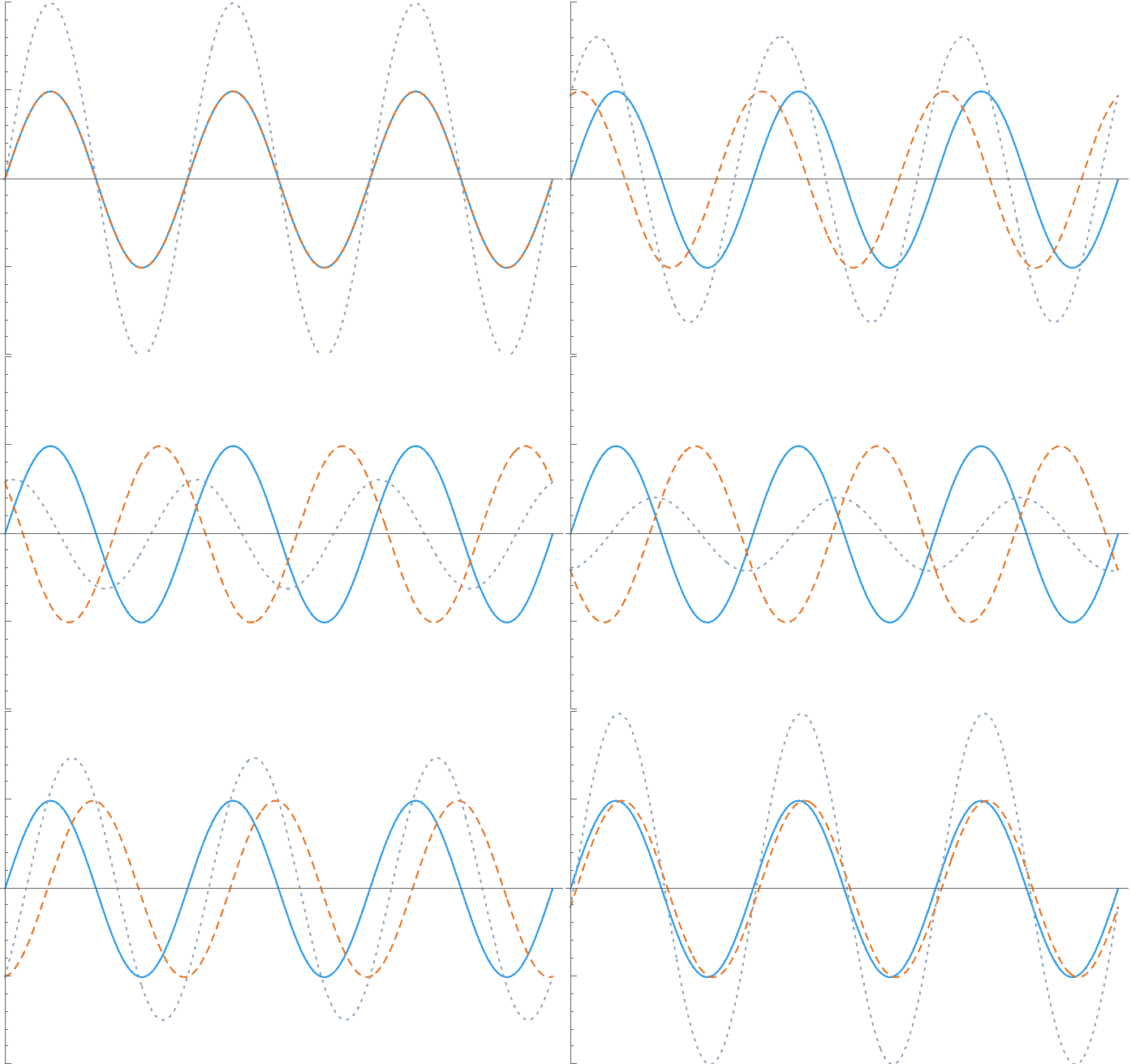
Software-Defined Electricity measures and corrects at nanosecond speed—electricity’s natural timescale. Not averaging over cycles. Not reacting after problems appear. Coordinating voltage, current, phase, and impedance continuously.
Power Quality Rating: 30-40% → 80%+ for THD, power factor, and phase balance
Generators deliver full nameplate capacity – No oversizing, no derating required
Harmonic distortion – Clean power across all phases, IEEE compliant
Phase imbalance: eliminated – Automatic distribution, neutral current to zero
Extended asset life – Reduced electrical stress means fewer failures, longer service
How SDE Integrates
Installation: Parallel connection at main panel (just like an appliance) — no downtime, no reconfiguration required
Operation: 100% grid edge controller — no internet dependency, no cloud, no cyber vulnerabilities
Efficiency Ratio: 200 W VectorQ Controller optimizes up to 60kW —multiple units coordinate for larger systems with 0% configuration
Where It Matters Most
Critical infrastructure
Islanded operations with $4-8/gallon cost for fuel
Expansion-constrained systems
Power Quality in Microgrids: Understanding the Challenge Two-page overview—why microgrids underperform, what optimal operation delivers, and how to validate performance gaps