
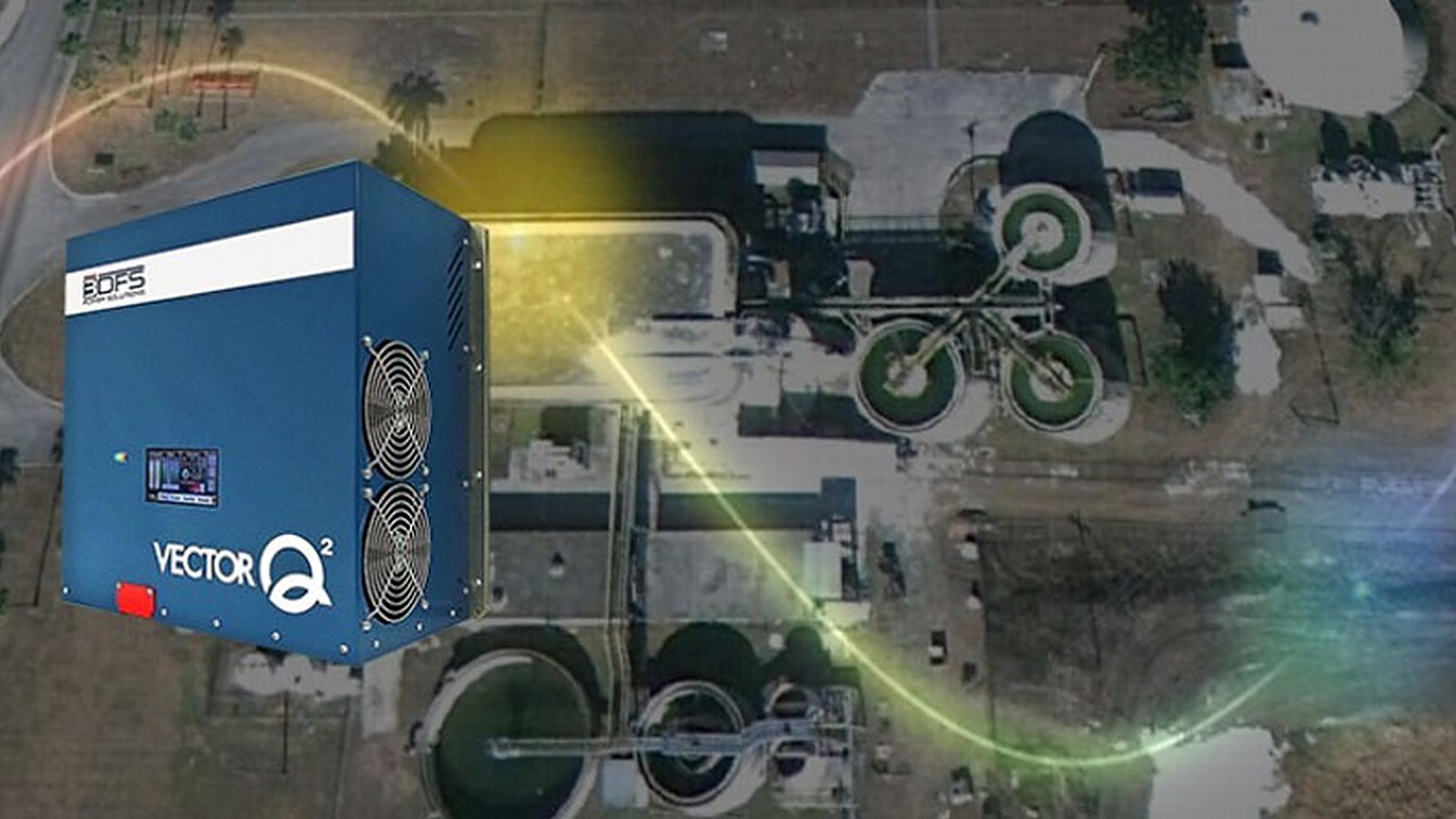

As we work on publishing our most current case studies, we are releasing the performance study that took place on October 21-23, 2013. This study was performed at a water treatment facility in Florida. The VectorQ2 production prototype was installed without interruption to the service and a third party evaluation was conducted by Intelligent Building Solutions, LLC, a company that provides mission critical facility services.
This report does a great job at showing how the VectorQ2 eliminates harmonics, brings power factor to unity, and synchronizes the current and voltage continuously. The VectorQ2 system will do this for any electrical network no matter the incoming power quality.
We are excited to release these results and will be following with more case studies and performance reports. If there are any questions that are not answered in the FAQ, please use the Contact Us form and we will get back to you as quickly as we can.
Report Highlights:
The VectorQ2 showed a significant reduction in THD, Phase Imbalance, Reactive Power, and overall improvement of Power Factor
Overall 20% savings on energy
Larger power usage would equal a even greater savings and efficiency gains
While the intent of the 3rd party analysis was to examine energy savings at the water treatment plant, some things of interest were observed:
Elimination of vibrations and a ~16db noise reduction on the main transformer with a significant temperature reduction
VectorQ2 successfully predicted the failure of phase B generator at the main plant three days in advance.
Request a copy of the 3rd party report:
Ask for a copy of the report through the contact page.
What a treatment plant’s current looks like
A treatment plant is a building full of motors. Pumps move the water, blowers push air into the tanks, and mixers and presses handle the sludge. Most of the large motors run on electronic drives, as the Water and Wastewater page describes.
Each drive draws its current in pulses, and the pulses land on the motor control center as distortion. Each motor on a starter draws current out of step with the voltage. The utility bills for the difference. Uneven loads leave the three phases unequal, and the motors fed straight from the bus run hotter.
A drive rectifies the incoming AC to DC, then inverts the DC back to AC at an adjustable frequency. The motor control center sees the rectifier’s current, and the motor sees the inverter’s output. Harmonic current through the source impedance makes harmonic voltage. The distortion is higher on a high-impedance source, such as the standby generator, as the Voltage Stability article explains.
What correction does at a pump panel
The controller connects in parallel at a motor control center or a lift station panel. The source feeding each pump panel then carries working current from the corrected loads. The controller does not keep a pump running through a sag. It does not reduce a motor’s starting current either.
Pilots start with a network analysis measured against the plant’s own baseline. We state no dollar saving without the tariff and the plant’s own meter data.
Where this stands today
The Press and Case Studies page keeps a summary of this study. The summary lists lower harmonic distortion, phase imbalance and reactive power, and a better power factor.
The Water and Wastewater page lists the same study among the records behind it. It reads one panel’s power factor and phase currents from the report. The report’s narrative gives no active power reading for that panel, so the page says the study supports no energy-saving claim. The Power Factor article cites the same audit among its measured tests.
Related reading
- Phase Balance: uneven phases heat motors, load the neutral
- Electric Optimization: wasted current fills the transformer
- Request a site analysis: an engineer replies with what we would measure first


Comments
2 responses to “Water Treatment Facility / Performance Study”
I think predictive failure is much more beneficial than energy savings, great post !
•
absolutely.
•